Introduction
The landscape of home coffee brewing has transformed significantly over the past two decades. Gone are the days when households had to choose between investing in full-size drip machines or manual brewing methods. Today, single-serve coffee makers have carved out a substantial niche in the market, appealing to people with varying lifestyles, preferences, and kitchen constraints.
The Keurig K-Slim represents one particular approach to single-serve coffee brewing. As with any appliance, understanding what it does, how it works, and whether it aligns with your household needs requires looking beyond marketing language and examining the practical details. This article explores the K-Slim’s design, functionality, and potential applications to help you make an informed decision about whether this type of machine makes sense for your situation.
Single-serve brewers operate on a fundamentally different premise than traditional coffee makers. Rather than brewing a full pot meant to sit on a heating plate, these devices prepare individual cups on demand. This approach offers certain conveniences but also introduces different considerations around cost, environmental impact, and quality control. The K-Slim specifically attempts to address some of these considerations through its particular design choices.
Understanding Single-Serve K-Cup Brewing
Before diving into the specifics of the K-Slim, it helps to understand how K-Cup technology works in general. K-Cups are small, pre-packaged containers of ground coffee that fit into a compatible brewing machine. The machine punctures the top and bottom of the pod, then forces hot water through the grounds and into your cup. This method was developed to address a simple problem: not everyone wants to brew an entire pot of coffee.
The K-Slim is designed to work specifically with K-Cup pods. This means your brewing options are limited to whatever varieties of K-Cups are available on the market, which are produced by Keurig and licensed partners. Some people find this convenient because the process is straightforward and requires minimal setup. Others see this as a limitation because it restricts choice and can affect long-term costs.
The machine doesn’t require a permanent coffee filter or paper filters, which eliminates one source of ongoing waste for individual cups. However, the K-Cups themselves are single-use containers that must be disposed of after brewing, which introduces different waste considerations that we’ll explore later.
Key Features of the Keurig K-Slim
Compact Footprint and Design
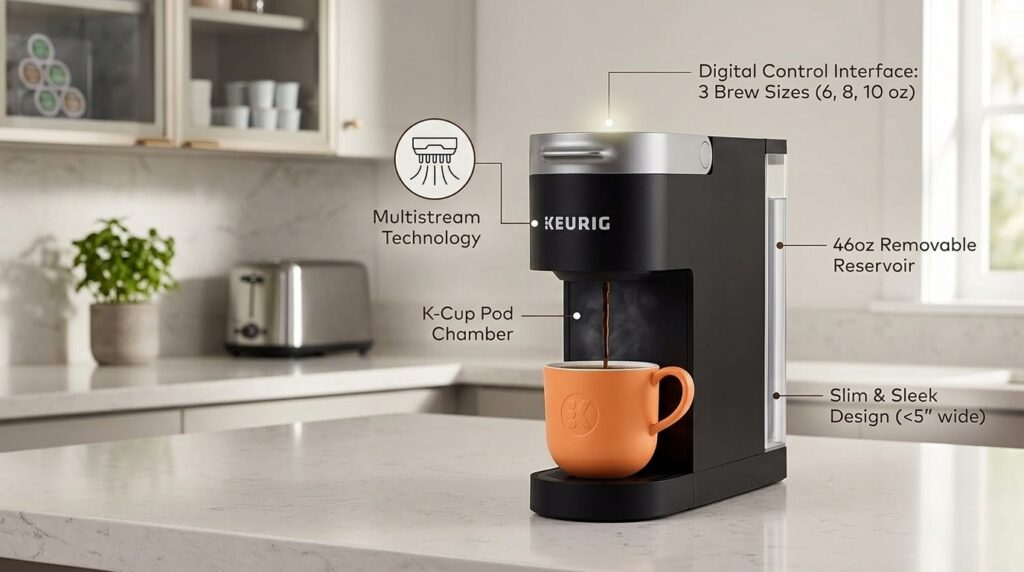
The defining characteristic of the K-Slim is its compact size. Traditional Keurig machines, like the popular K-Classic and K-Elite models, take up considerably more counter space. The K-Slim is specifically engineered for small kitchens, apartments, dorm rooms, or office spaces where square footage is at a premium.
The “slim” designation refers to the machine’s vertical profile rather than its overall dimensions in all directions. It maintains a footprint similar to other single-serve brewers but accomplishes this through thoughtful design. The water reservoir sits vertically rather than horizontally, which changes how the machine occupies space on your counter.
The black finish is fairly standard across Keurig’s lineup and tends to blend into modern kitchen aesthetics without drawing particular attention. It’s a neutral color choice that works with various kitchen styles without requiring matching or coordination.
The 46-Ounce Removable Reservoir
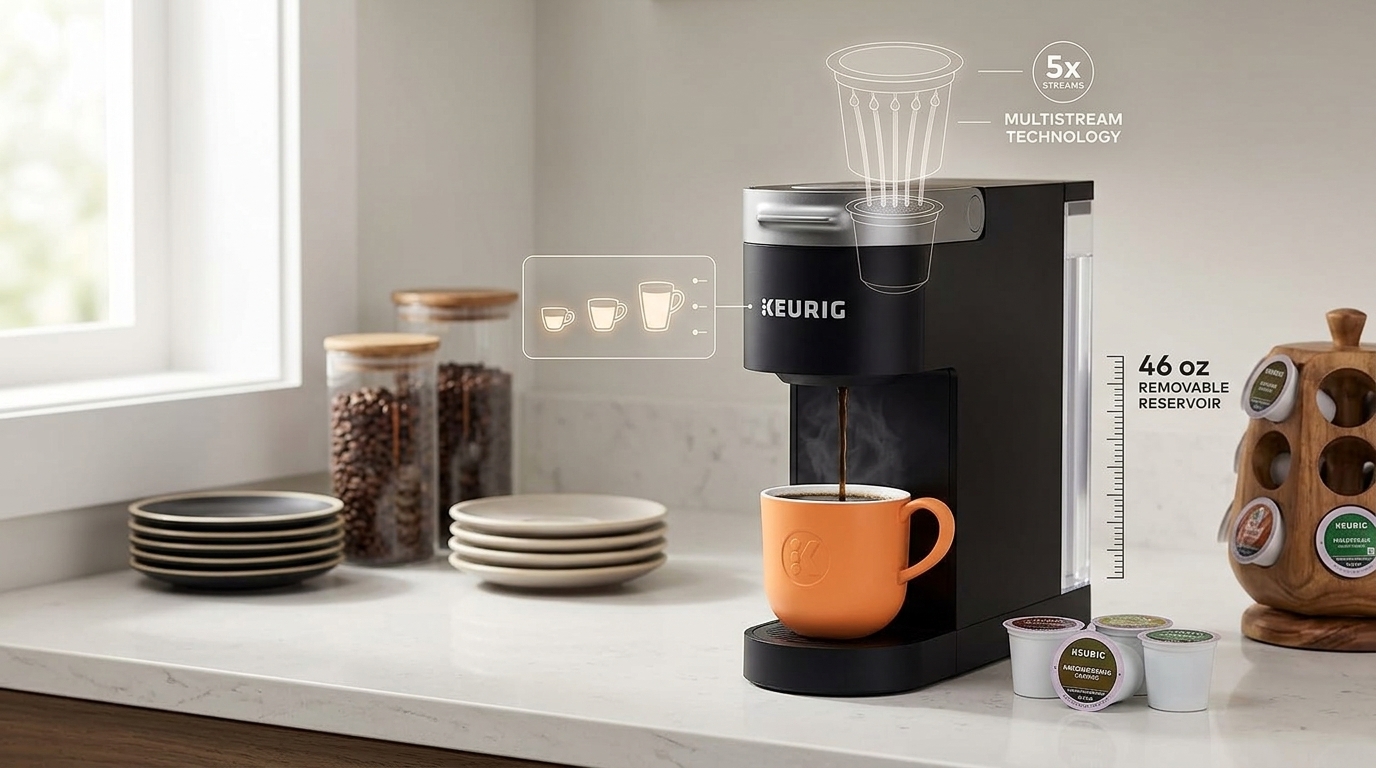
Water capacity is a practical consideration when choosing a coffee maker. The K-Slim includes a 46-ounce removable water reservoir, which translates to roughly 5-6 cups of water capacity depending on your brew size.
What this means in practice: you can brew several cups before needing to refill the reservoir. This is convenient if you’re making multiple cups in succession, though it requires refilling more frequently than larger machines if you’re in a household where multiple people brew throughout the day. The removable design allows you to fill the reservoir away from the machine, which is more convenient than machines where you must fill the reservoir in place.
The size strikes a middle ground—larger enough to avoid constant refilling for light to moderate use, but small enough that the entire machine remains compact. If you’re someone who makes six cups before lunch and refills often feel burdensome, this reservoir size might factor into your decision.
Multistream Technology
This feature represents Keurig’s approach to improving water distribution during brewing. Rather than a single stream of water flowing through the coffee grounds, multistream technology distributes water across multiple points within the K-Cup pod. Theoretically, this approach can lead to more even saturation of the grounds and more consistent extraction.
In practical terms, this means the coffee you brew should have more consistent flavor from one cup to the next. With uneven water distribution, some grounds might be under-extracted (resulting in weak, sour coffee) while others are over-extracted (resulting in bitter flavors). Multistream technology attempts to minimize these variations.
However, it’s important to note that single-serve K-Cup brewing is inherently limited compared to manual methods like pour-over or French press, where the user has direct control over water temperature, saturation, and brew time. The technology represents an improvement within the K-Cup system but operates within those pre-set constraints.
Three Brew Sizes
The K-Slim offers three brewing options: 6-ounce, 8-ounce, and 10-ounce sizes. This flexibility allows you to adjust the strength and volume of your coffee based on what you’re using to drink from and your personal preference.
A 6-ounce brew is more concentrated and strong—suitable for a small cup or someone who prefers robust coffee. An 8-ounce brew represents a middle ground that works for standard coffee mugs. A 10-ounce option provides a larger serving, suitable for bigger mugs or thermoses.
The brew size you select affects not just volume but also strength, since the machine uses a relatively constant amount of coffee (one K-Cup pod) with varying amounts of water. Smaller brew sizes result in stronger coffee; larger sizes result in milder coffee. Some people adjust brew sizes based on the time of day or their current caffeine needs.
Heating and Brew Time
The K-Slim reaches brewing temperature relatively quickly compared to some traditional coffee makers, though it’s not instantaneous. From a cold start, the machine typically requires a few minutes to heat water before it can begin brewing. Once heated, individual brew cycles are quite fast—usually completed within a minute.
This means if you’re in a rush in the morning, you might need to factor in startup time. However, if you leave the machine powered on, it maintains its ready state, and subsequent brews happen quite quickly. The trade-off is that the machine consumes electricity to maintain temperature readiness.
Brewing Controls
The K-Slim features straightforward controls—typically a power button and size selection buttons. This simplicity means there’s little learning curve, though it also means fewer customization options compared to models with adjustable temperature or brew strength settings.
The interface is designed for quick, daily use rather than experimentation or fine-tuning. If you value simplicity and consistency in your morning routine, this straightforward approach might appeal to you.
How Single-Serve K-Cup Brewing Fits Into Daily Life
Quick Morning Routines
The most common use case for single-serve brewers is accommodating busy mornings. Unlike traditional drip coffee makers that brew entire pots, a single-serve machine produces just your cup. You don’t have to wait for a full pot to finish brewing if you’re the only one making coffee that morning.
The setup is also minimal—drop in a K-Cup, select your size, and wait a minute. There’s no measuring out grounds, no paper filter to replace, and no pitcher of brewed coffee sitting on a warming plate.
Households With Different Preferences
In multi-person households, people often have different coffee preferences. One person might prefer dark roast while another likes medium roast. One might always drink 8 ounces while another prefers 6. With single-serve brewing, each person can make exactly what they want without affecting anyone else’s coffee.
This eliminates the common household scenario where one person makes coffee in a drip machine, and by the time the third person wants coffee, it’s either cold and has been sitting for hours or requires reheating.
Offices and Shared Spaces
Single-serve brewers are increasingly common in office break rooms, small businesses, and shared workspaces. The K-Slim’s compact size makes it suitable for these environments. Multiple people can use the machine throughout the day, each making exactly one cup, and the machine doesn’t require significant counter space.
Flexibility Throughout the Day
Some people use single-serve machines not just for morning coffee but for afternoon cups, evening decaf, or tea. The convenience of making just one cup on demand makes it feasible to have coffee more casually throughout the day without committing to a full pot.
Who Might Find This Type of Machine Suitable
Space-Conscious Living Situations
Anyone living in a small apartment, dorm room, tiny house, or RV might find a compact single-serve brewer more practical than a traditional machine. The K-Slim’s specific design priority is space efficiency, making it particularly relevant for these situations.
Solo Dwellers and Small Households
If you live alone or with one other person, brewing a full pot of coffee seems wasteful. With single-serve brewing, you’re making exactly what you’ll drink, which feels more efficient.
People Who Value Simplicity
If you appreciate appliances that do one thing well without excessive features or settings, the K-Slim’s straightforward approach might appeal to you. You’re not navigating complicated menus or multiple settings.
Regular Travelers or Frequent Movers
The compact, lightweight design makes this type of machine easier to move or take with you if you travel frequently for work or live in temporary housing.
Workplaces and Offices
For small offices, break rooms, or shared spaces, a compact single-serve brewer reduces conflicts over coffee preparation and offers flexibility for different preferences.
Important Considerations Before Choosing This Machine
Ongoing Pod Costs
K-Cups have a per-cup cost that accumulates over time. Depending on the brand and where you purchase them, K-Cup pods can range from roughly fifty cents to two dollars per pod. For context, brewing coffee from ground beans in a drip machine typically costs fifteen to thirty cents per cup.
If you brew one cup daily, the difference over a year can be significant. This is an important financial reality to factor in, especially if you’re cost-conscious about everyday expenses.
Environmental Impact of Single-Use Pods
K-Cups are single-use containers. After brewing, the pod goes into the trash or compost (depending on your waste management practices). While Keurig has introduced recyclable pod options, the fact remains that each cup of coffee produces waste.
For environmentally-conscious consumers, this is a legitimate consideration. Many people weigh the convenience against their personal environmental values. Some find ways to minimize impact by seeking out compostable or recyclable pods or by being intentional about when they use the machine versus alternative brewing methods.
Limited Beverage Variety
Your beverage options are limited to whatever K-Cup pods are available on the market. While the selection is extensive, it’s not infinite. If you enjoy specific coffee roasts, brands, or origin-specific beans that aren’t available in K-Cup format, this machine won’t provide access to them.
This is particularly relevant for coffee enthusiasts who are particular about bean sourcing or quality.
Water Temperature and Brew Consistency
Single-serve K-Cup brewing is inherently more limited in user control compared to manual brewing methods. You can’t adjust water temperature, brew time, or water-to-grounds ratio. While multistream technology improves consistency, these constraints mean the brewing experience is predetermined by the machine’s settings and the K-Cup pod’s design.
People who enjoy hands-on brewing and fine-tuning their coffee might find this limiting.
Reservoir Size and Refilling
While the 46-ounce reservoir is adequate for light to moderate use, households where multiple people brew multiple cups throughout the day might find themselves refilling frequently. This isn’t necessarily a dealbreaker, but it’s worth considering your household’s actual usage pattern.
Maintenance and Descaling
Like all coffee makers that use water, the K-Slim requires periodic descaling to prevent mineral buildup from hard water. Depending on your water hardness, this might be needed every few months or annually. Descaling involves running a cleaning solution through the machine and requires dedicating some time to the process.
How Single-Serve Brewers Compare to Other Methods
Versus Traditional Drip Coffee Makers
Drip machines brew larger quantities at a lower cost per cup. They’re ideal if you consistently make multiple cups. However, they require more counter space, take longer to brew a full pot, and the coffee sitting on a heating plate degraded in quality over time.
Single-serve machines excel at flexibility and avoiding waste if you’re not consistently making multiple cups.
Versus Pour-Over and Manual Methods
Manual brewing methods like pour-over, French press, or AeroPress offer significant user control over water temperature, contact time, and extraction. Coffee enthusiasts typically prefer these methods for quality. However, they require more active involvement and attention.
Single-serve machines are more convenient and require less skill or attention, though the coffee quality is generally considered less controllable.
Versus Espresso Machines
Espresso machines produce a completely different beverage—concentrated, high-pressure extraction that’s the foundation for lattes, cappuccinos, and other specialty drinks. Single-serve brewers produce standard drip-style coffee.
These are tools for different purposes rather than direct alternatives.
Versus Instant Coffee
Instant coffee is more convenient and costs less per serving, but most people find the quality and taste noticeably inferior to brewed coffee. Single-serve brewers represent a middle ground between convenience and quality.
Frequently Asked Questions
How often should I descale the machine?
Descaling frequency depends on your water hardness. In areas with hard water, every two to three months is typical. In areas with soft water, every six months or annually might suffice. Your machine manual will provide specific guidance, and many machines have indicator lights that alert you when descaling is needed.
Can you use the same K-Cup twice?
Technically possible, but not recommended. K-Cup pods are designed for single use. Reusing them typically results in weak, thin coffee because most of the extractable compounds are removed during the first brew. Additionally, the pod and punctures weren’t designed to maintain integrity through multiple water exposures.
What happens if you accidentally brew without a K-Cup?
The machine will dispense hot water into your cup. This won’t damage the machine, but you’ll get hot water rather than coffee. It’s a simple mistake that’s easily remedied by filling the cup down the drain, inserting a K-Cup, and brewing again.
Is the machine noisy?
Single-serve K-Cup brewers are generally not exceptionally loud, though they do produce noise during the brewing cycle. If you’re sensitive to appliance noise, you might find the sound noticeable, particularly during the initial water heating phase.
Can you brew hot water for tea?
Yes. You can dispense hot water without inserting a K-Cup for tea, hot chocolate, or other hot beverages. This versatility makes the machine useful even if you don’t exclusively drink coffee.
How long do K-Cups stay fresh?
K-Cup pods have an estimated shelf life of eight to twelve months when stored in a cool, dry place. Over time, the coffee inside may lose flavor and aroma. Buying pods in quantities you’ll use relatively quickly helps ensure fresher taste.
What’s the difference between a K-Slim and other Keurig models?
Different Keurig models offer various feature combinations. The K-Slim prioritizes compact size and is intentionally designed to be slim and space-efficient. Other models might offer different reservoir sizes, additional brewing options, or more advanced features. The K-Slim is specifically engineered for people who value a smaller footprint over additional features.
Is the machine energy-efficient?
Single-serve brewers use less energy than keeping a full pot of drip coffee hot on a heating plate throughout the day. However, if you leave the machine powered on continuously to maintain readiness for quick brewing, it consumes electricity for that standby state. Turning it off when not in use reduces energy consumption.
Can you brew into a travel mug or larger container?
The machine is designed to brew into a cup or mug placed underneath the brew head. Larger travel mugs can typically fit, though you may need to remove the drip tray if your travel mug is particularly tall. The largest brew size is 10 ounces, so if you want more than that, you’d need to brew multiple times.
Conclusion
The Keurig K-Slim represents a specific approach to coffee brewing that prioritizes compact design and convenience for single servings. It’s not the optimal choice for every household, but it addresses real needs for certain living situations and usage patterns.
The machine makes sense if you live in a space-constrained environment, live alone or with few others, value simplicity, and don’t mind the higher per-cup cost of K-Cup pods. It might not be the right choice if you consistently brew for multiple people, are sensitive to per-unit costs, have concerns about disposable waste, or prefer hands-on control over your brewing process.
Understanding these trade-offs—convenience versus cost, simplicity versus flexibility, compact size versus reservoir capacity—allows you to make a decision based on your actual household needs rather than marketing claims or general trends.
Single-serve coffee brewing has become mainstream because it genuinely addresses practical problems for many people. Whether it’s the right solution for your particular situation depends on your living space, usage patterns, environmental values, and budget priorities.